
From family living rooms to Jakarta cafés, hotel lounges and Gen Z social nights, Mahjong is having a very 2026 comeback.
Click. Clack. Click. Clack.
There is something hypnotic about the sound of Mahjong tiles hitting the table.
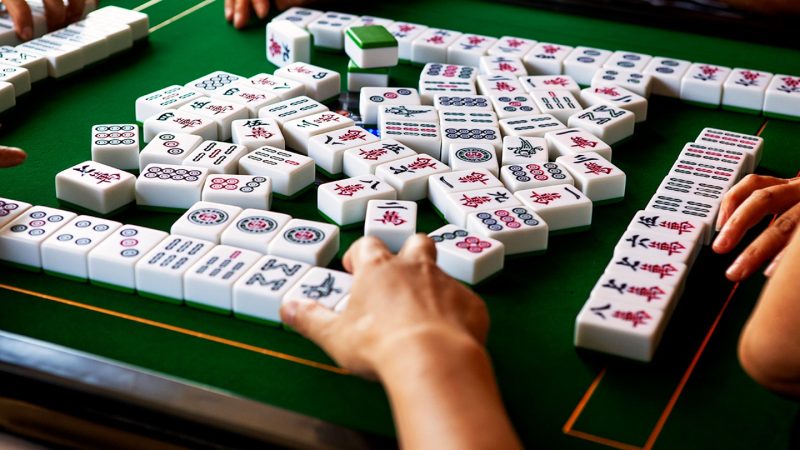
Four players sit around a square table. Hands move quickly: shuffle, arrange, draw, discard. Someone studies the tiles. Someone laughs. Someone groans. Someone suddenly sits up because they think they have the winning hand.
For decades in Indonesia, Mahjong was largely associated with Chinese-Indonesian families, older generations and, sometimes, gambling. Today, the scene looks very different.
Mahjong tables are appearing in cafés, restaurants, hotels and dedicated clubs. Beginner classes are being advertised on social media. WhatsApp groups bring players together. Automatic Mahjong tables are becoming a new home purchase. And young urban Indonesians are discovering that an ancient game can be surprisingly addictive in the age of TikTok, Instagram and endless notifications.
As of September 2026, Ayo’s Jakarta directory lists 71 venues offering Mahjong, with listed session prices ranging from around Rp40,000 to Rp199,000 depending on the venue and format.
So, why Mahjong? Why now?
Mahjong isn’t the only game that can bring people together around a table. Card games and board games have been doing that for generations. What makes Mahjong’s current revival interesting is the particular combination of strategy, social interaction, ritual, nostalgia and sheer tactile appeal.
The game itself creates conversation and interaction. You are watching what the other players discard, trying to read their strategy, deciding whether to take a risk and reacting to every unexpected turn.
There is luck, but skill matters too—memory, pattern recognition, probability, observation and decision-making all come into play. And unlike many games, Mahjong has a distinctive physical ritual: shuffling the tiles, building the wall, arranging your hand and hearing that unmistakable click-clack as the tiles move across the table.
Modern Mahjong clubs, colorful tile sets and social events have added another layer, turning an old game into a contemporary lifestyle experience.
Perhaps that is why Mahjong is having its moment now. It is a game with its own culture, ritual and community, one that feels both wonderfully old-fashioned and surprisingly fresh.
The Game of a Thousand Intelligences
Mahjong is an ancient Chinese tile game whose origins are generally traced to China in the 19th century. It spread beyond China in the late 19th and early 20th centuries and developed into numerous regional variations.
The name itself is commonly linked to the Chinese word for sparrow, traditionally associated with the sound of tiles being shuffled and clicked across the table.
The game generally requires four players and a set of 144 tiles, although the exact tiles and rules vary between versions.
At its heart, the objective is deceptively simple: players draw and discard tiles while attempting to build a winning combination of sets and pairs.
Think of it as having some of the logic of rummy—but with tiles, a much larger vocabulary of combinations and considerably more regional variation.
Winning is a mixture of skill and luck. And that balance may be part of the magic. You can play intelligently and still lose. Sometimes a beginner can occasionally produce an astonishing winning hand. Which means nobody is ever completely safe.
It started with grandparents. Then came Crazy Rich Asians.
For many younger people outside Asian communities, Mahjong entered the cultural conversation through Crazy Rich Asians.
The 2018 film’s famous Mahjong scene introduced the game—and its symbolism, relationships and unspoken language—to a global audience. But, the current revival is bigger than a Hollywood movie.
The game has become increasingly visible on Instagram and TikTok. Colorful contemporary Mahjong sets look beautiful in photographs. Stylish cafés and clubs have turned the table into a lifestyle experience.
And perhaps most importantly, younger people have started looking for ways to socialize that don’t involve staring at a screen.
The result is a curious reversal:
A game from the pre-digital era has become an antidote to the digital era.
Jakarta: Mahjong has left the living room
The clearest evidence of the Mahjong revival is simply the number of places where you can now play in Jakarta..
Current listings include venues across North, Central and West Jakarta, with particularly strong activity around Sunter, Kelapa Gading, PIK and Puri Indah. The current Ayo directory includes venues such as PengYou Mahjong PIK, Rumah Maciok Mahjong Parlor Sunter, OUGURI Mahjong PIK, Fivestar Signature Club, T2 Taiwanese Mahjong, Ba Fa Mahjong, Social Mahjong House, MAXI Mahjong Club, Aruku Mahjong Club, Citato Mahjong and many others.
And the prices make it surprisingly accessible.
A table can currently start at around Rp40,000 per session, with many venues falling in the Rp50,000–Rp100,000 range. Premium venues and longer sessions cost more.
For four friends sharing a table, Mahjong can therefore be a relatively inexpensive night out.
Learning and Teaching Mahjong
Mahjong teachers are becoming a profession of sorts.
Experienced players who once travelled from one private gathering to another to teach groups are finding themselves with enough demand to develop regular classes—and some of their former students are now becoming teachers themselves.
The learning curve has become part of the social experience.
In Jakarta, Side Quest Social currently offers a progression from Intro to Mahjong to Upper Beginner and then Casual Play. The beginner course starts from the basics—shuffling, dealing and building a winning hand—while the next level moves into scoring, winds, dragons, flowers and winning combinations.
Hotels have also entered the picture. Mahjong has gone from something you had to know somebody to learn to something you can simply book.
The communities behind the tiles
The venues are visible, but the communities are the real story.
One of the most interesting is Sahabat Mahjong Society, founded in 2025. By July 2026, the community was holding sessions in public venues such as Hotel Monopoli in Kemang and attracting players across generations. detikX described the new audience as young urban Indonesians looking for both entertainment and real-world connection.
The more established specialist communities like the Riichi Mahjong have their own following among people interested in Japanese Mahjong, board games and competitive play.
And increasingly, the boundaries between Mahjong communities are becoming porous. A person might start with a casual social game, become interested in the strategy, learn a different ruleset and eventually find themselves travelling to tournaments.
Many Versions of Mahjong
This is where things get interesting. There are numerous Mahjong variants around the world, each with its own rules, scoring systems and traditions.
Chinese / traditional Mahjong
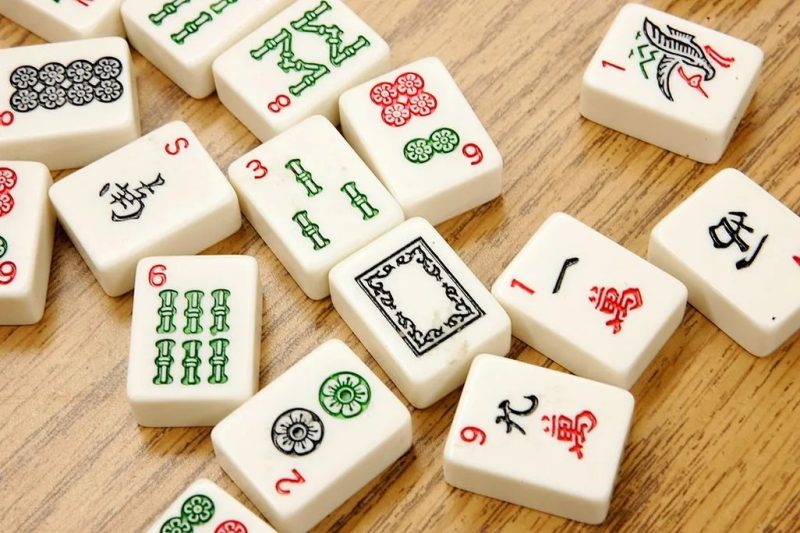
This is broadly what many people imagine when they hear the word Mahjong. The familiar suits include bamboo, circles and characters, alongside winds, dragons and other tiles. But even here, rules vary according to region and household tradition.
Hong Kong Mahjong
A fast and popular version with its own scoring structure and hand requirements.
Japanese Riichi Mahjong
This is the version favored by many competitive and Japanese-culture communities. Riichi introduces a more formal scoring system, specific winning conditions and the famous declaration of riichi. It has developed into a serious competitive game.
Taiwanese Mahjong
Typically played with 16 tiles rather than the more familiar 13-tile hand structure, making the game feel quite different.
International Mahjong
International Mahjong typically refers to Competitive Mahjong (also known as Official International Rules or MCR), a standardized rule set created to unify global play.
So if someone tells you: “I play Mahjong.”
The correct response is: “Which one?”
The new home accessory: A Mahjong table
For the truly converted, the Mahjong experience doesn’t stop at the club.
The table is coming home.
Automatic Mahjong tables—once something you might associate with specialist clubs—are increasingly being marketed to private players, and the appeal is obvious.
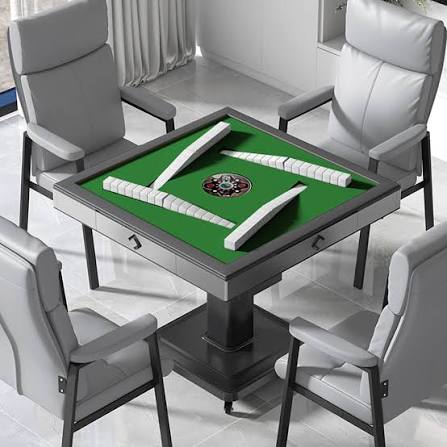
Put four friends around the table and the machine handles much of the repetitive work of shuffling and arranging the tiles. The result is faster games and less setup.
It also transforms the meaning of the Mahjong table itself. It becomes part furniture, part entertainment system, part social magnet.
Just as some homes have invested in pool tables, ping-pong tables or home bars, Mahjong tables are becoming another way of saying: “This is where we get together.”
The real attraction? People.
Ask Mahjong players why they keep coming back and the answer is rarely just:
“Because I love tiles.”
It is the people.
There is something particularly satisfying about the social rhythm of a Mahjong table. You compete against each other and help beginners.
You tease the person who just threw away the tile you desperately needed. You celebrate a spectacular win. And then you reset the tiles and start again.
One description of the new global Mahjong culture captures this beautifully: players describe themselves as “celebratory competitive”—competitive, but genuinely happy when someone else pulls off a great hand.
That may be the secret.
Mahjong allows people to compete without making competition the whole point.
Click. Clack. Your turn.