
BRICS 2026: Why the New Delhi Summit Matters for Indonesia, India and the Indoindians Community
New Delhi has just hosted a BRICS summit that could prove more significant for Indonesia and India than the formal declarations alone suggest. With Indonesia now a full member of BRICS and India at the helm of the grouping in 2026, the summit brought together two countries that increasingly find themselves on the same side of some of the biggest questions facing the Global South: food and energy security, resilient supply chains, economic development, technology, sustainability and a greater voice in global decision-making.
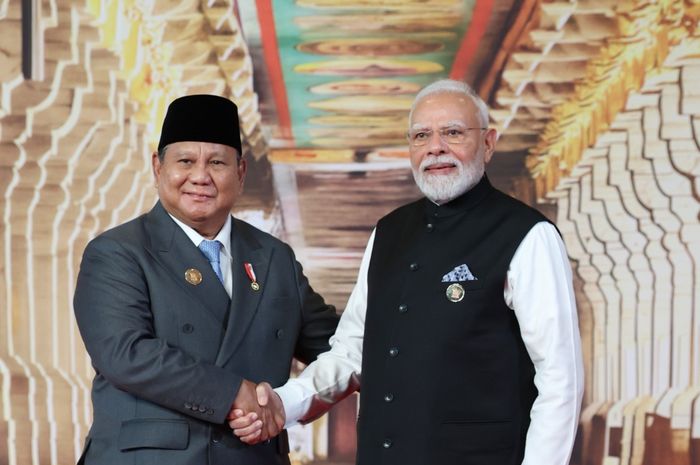
President Prabowo Subianto’s presence at the 18th BRICS Summit in New Delhi on 12–13 September was therefore more than Indonesia’s participation in another international gathering. It was an important statement about where Indonesia sees itself in an increasingly fragmented global order — and about the role it wants to play in shaping that order.
For India, the summit was also an opportunity to demonstrate what its 2026 BRICS chairship could deliver. Under the theme “Building for Resilience, Innovation, Cooperation and Sustainability,” India sought to place people, development and practical cooperation at the center of the BRICS agenda. More than 400 BRICS-related meetings and engagements were held across 30 Indian cities during the chairship, underlining India’s attempt to make BRICS more than an annual leaders’ summit.
For Indonesia, this was its first BRICS summit as a full member. President Prabowo used the platform to make clear that Indonesia does not see BRICS simply as an economic grouping, nor as an alliance directed against any particular power. Instead, Jakarta’s message was that developing and emerging countries should have greater capacity to determine their own future and a stronger voice in the institutions that govern the international system.
That message has a distinctly Indonesian historical resonance.
From Bandung to BRICS
One of the most striking elements of Pak Prabowo’s intervention was his reference to the 1955 Asian-African Conference in Bandung.
More than seven decades ago, newly independent Asian and African nations gathered in Bandung to assert principles of equality, sovereignty, non-interference and cooperation at a time when much of the developing world was still emerging from colonial rule. Today, Pak Prabowo argues, the underlying lesson remains relevant: countries that act together can have a greater voice than countries acting alone.
The New Delhi Declaration itself explicitly recalls the Bandung Conference and its principles, describing the Bandung Spirit as a reference point in the pursuit of a fairer, more inclusive and representative multilateral system.
For Indonesia, this gives BRICS a distinctly different meaning from simply joining another international economic club. It places the country’s BRICS membership within a much longer foreign-policy tradition — one in which Indonesia seeks strategic autonomy while maintaining relationships with different major powers.
Pak Prabowo’s message was equally clear on this point. Indonesia, he said, does not want to be dictated to by one or two powers. For him, national resilience begins at home: being able to feed the population, secure energy, educate children and create opportunities for prosperity.
That is a powerful message because it links foreign policy directly to everyday economic security.
Food and energy security move to center stage
Among the most practical issues discussed at the summit were food and energy.
These are not abstract geopolitical questions for Indonesia, India or much of Asia. Food prices, fertilizer supplies, shipping disruptions, energy costs and climate-related shocks can quickly affect household budgets, businesses and national economies.
The BRICS declaration recognized the importance of the group’s collective role in global food production and called for stronger cooperation in agricultural productivity, food security, supply chains and agricultural inputs. It also welcomed further work towards a possible BRICS Grain Exchange, alongside cooperation in agroecology, regenerative agriculture and digital agriculture.
This is an area where Indonesia and India have considerable room for practical cooperation.
Both countries have large populations, substantial agricultural sectors and strong interests in reducing vulnerability to international supply disruptions. Indonesia’s growing agricultural production and India’s enormous agricultural ecosystem could create opportunities ranging from technology and knowledge exchange to agricultural inputs, food processing, logistics and resilient supply chains.
Pak Prabowo went a step further in New Delhi, pointing to Indonesia’s transformation from a major importer of rice and corn to an exporter. His broader argument was that national weaknesses can be transformed into national capabilities — and that BRICS countries should combine their respective strengths rather than simply trade raw commodities.
That idea could become particularly important for Indonesia–India economic relations.
Critical minerals, energy and the next industrial race
Another major theme emerging from the summit is the growing importance of critical minerals.
The global transition towards electric vehicles, renewable energy, batteries, semiconductors and other advanced technologies has created a new strategic competition around minerals and the supply chains required to process them.
Indonesia is particularly well positioned in this conversation because of its mineral resources and growing ambitions in downstream processing. India, meanwhile, is seeking to expand its manufacturing capabilities, technology ecosystem and secure access to strategic resources.
The BRICS declaration called for reliable, diversified and resilient critical-mineral supply chains, while emphasizing value addition and economic diversification in resource-rich countries.
This is important for Indonesia because the opportunity is not simply to export minerals. The bigger opportunity is to participate further up the value chain — in processing, manufacturing, technology, research and industrial development.
It is also an area where Indian and Indonesian interests could increasingly intersect.
The two countries already identify critical minerals and rare earths among the areas for cooperation under their Comprehensive Strategic Partnership. When combined with BRICS cooperation on energy, technology and supply chains, this creates a potentially important platform for deeper economic engagement.
A more resilient Global South
The economic message from New Delhi was accompanied by a larger political one.
BRICS now brings together 11 full members, including Indonesia, and has expanded its network of partner countries. Collectively, the grouping represents a substantial share of the world’s population and economic activity. But size alone does not guarantee influence.
The challenge for BRICS is whether such a diverse collection of countries can convert its economic weight into practical cooperation and greater influence over global institutions.
The New Delhi Declaration calls for greater representation of emerging-market and developing economies in global decision-making, including reform of the United Nations and the international financial institutions.
Pak Prabowo made a similar argument from Indonesia’s perspective, calling for the UN to remain at the center of the multilateral system while arguing that it must become more representative, responsive and capable of delivering tangible results.
This is where India’s and Indonesia’s interests are particularly compatible.
Both are large democracies in Asia. Both are major developing economies. Both have historically advocated greater representation for developing countries. And both have increasingly sought to ensure that the Global South is not simply a group whose interests are discussed by others, but a group capable of shaping the rules itself.
What does this mean for India–Indonesia relations?
Perhaps the most interesting aspect of the 2026 summit is that BRICS adds another layer to an already deepening India–Indonesia relationship.
India and Indonesia have been strengthening their Comprehensive Strategic Partnership across trade and investment, defense and maritime cooperation, digital and financial technology, energy, healthcare, pharmaceuticals, space, critical minerals, agriculture, tourism and people-to-people ties.
Indian Prime Minister Narendra Modi and President Prabowo have also had several high-level engagements, including Modi’s state visit to Indonesia in July 2026.
India’s BRICS chairship therefore came at an interesting moment in bilateral relations. The priorities identified by India’s BRICS presidency — resilience, innovation, cooperation and sustainability — closely overlap with areas that India and Indonesia are already seeking to develop bilaterally.
India’s Ambassador to Indonesia, Sandeep Chakravorty, recently noted that the BRICS agenda is increasingly aligned with the priorities of India–Indonesia bilateral cooperation. That alignment matters. It means BRICS does not necessarily have to compete with bilateral relationships. Instead, it can become an additional platform through which India and Indonesia pursue shared interests.
The opportunity for businesses and communities
For businesses, the implications could eventually be more significant than the geopolitical headlines.
Greater cooperation within BRICS could help create new opportunities in areas such as food and agriculture, renewable energy, critical minerals, manufacturing, logistics, digital technology, healthcare and education.
The New Delhi Declaration also places emphasis on resilient global value chains and encouraging BRICS countries to move further up those value chains.
For Indonesian and Indian businesses, this could mean a shift from thinking primarily in terms of bilateral exports and imports towards thinking about joint production, investment and regional supply chains.
Indonesia has resources and a large consumer market. India has a huge domestic market, manufacturing capabilities, technology and an increasingly globalized business sector. Both have large pools of young people and entrepreneurs.
The opportunity is to connect these strengths.
And this is where the Indoindians community has an especially interesting role to play.
The Indian community in Indonesia sits naturally at the intersection of the two countries. Businesses, professionals, students, entrepreneurs and families connected to both India and Indonesia can become informal bridges between the two economies and societies.
The significance of stronger India–Indonesia ties is therefore not limited to governments or large corporations. It can eventually translate into more educational exchanges, professional opportunities, entrepreneurship, cultural cooperation, tourism and business connections.
BRICS is not without challenges
It would also be wrong to assume that BRICS will automatically become a cohesive alternative to the existing global economic order.
The grouping brings together countries with very different political systems, strategic priorities and relationships with one another. India and China remain strategic competitors despite recent efforts to stabilize their relationship. Members also have differing positions on major geopolitical questions.
The challenge for BRICS will therefore be to demonstrate that its diversity can become a strength rather than a source of paralysis.
The New Delhi Summit produced a joint declaration despite those differences. It addressed issues ranging from global governance and trade to food, energy, climate, critical minerals, technology and international conflicts.
That consensus is meaningful — but implementation will matter more.
The real test of BRICS will be whether agreements translate into easier trade, stronger supply chains, more investment, better technology cooperation, greater food and energy security and tangible benefits for ordinary people.
Why this matters to Indoindians
For the Indoindians community, the 2026 BRICS Summit is worth watching not simply because an Indonesian President travelled to India, or because India hosted a major international summit. It matters because India and Indonesia are increasingly becoming important partners in shaping the future of the Global South. The two countries are separated by geography but connected by history, the Indian Ocean, commerce, culture and increasingly by shared strategic interests.
Indonesia’s participation in BRICS gives Jakarta another platform from which to pursue strategic autonomy and economic resilience. India’s BRICS chairship has provided New Delhi with an opportunity to position itself as a bridge between major powers and the wider developing world.
Together, India and Indonesia have the potential to make that relationship even more consequential.
The Bandung Conference of 1955 was about newly independent nations demanding a voice.
BRICS in 2026 is taking place in a very different world — but the underlying question is remarkably similar:
Who gets to shape the rules of the international system?
For India and Indonesia, the answer increasingly appears to be: the Global South should have a seat at the table — and a meaningful role in deciding what happens there.