

Indonesia’s Spice Story – The flavors that travelled the world
More than half of the world’s spice varieties and types originated in Indonesia. That is an extraordinary thought when you consider how casually we use them every day. A little turmeric in the bumbu, ginger crushed with garlic, a sprinkle of pepper, a cinnamon stick in a pot, cloves in a festive recipe. To us, they are simply part of cooking. But these small, fragrant ingredients have a story that stretches across centuries and oceans.
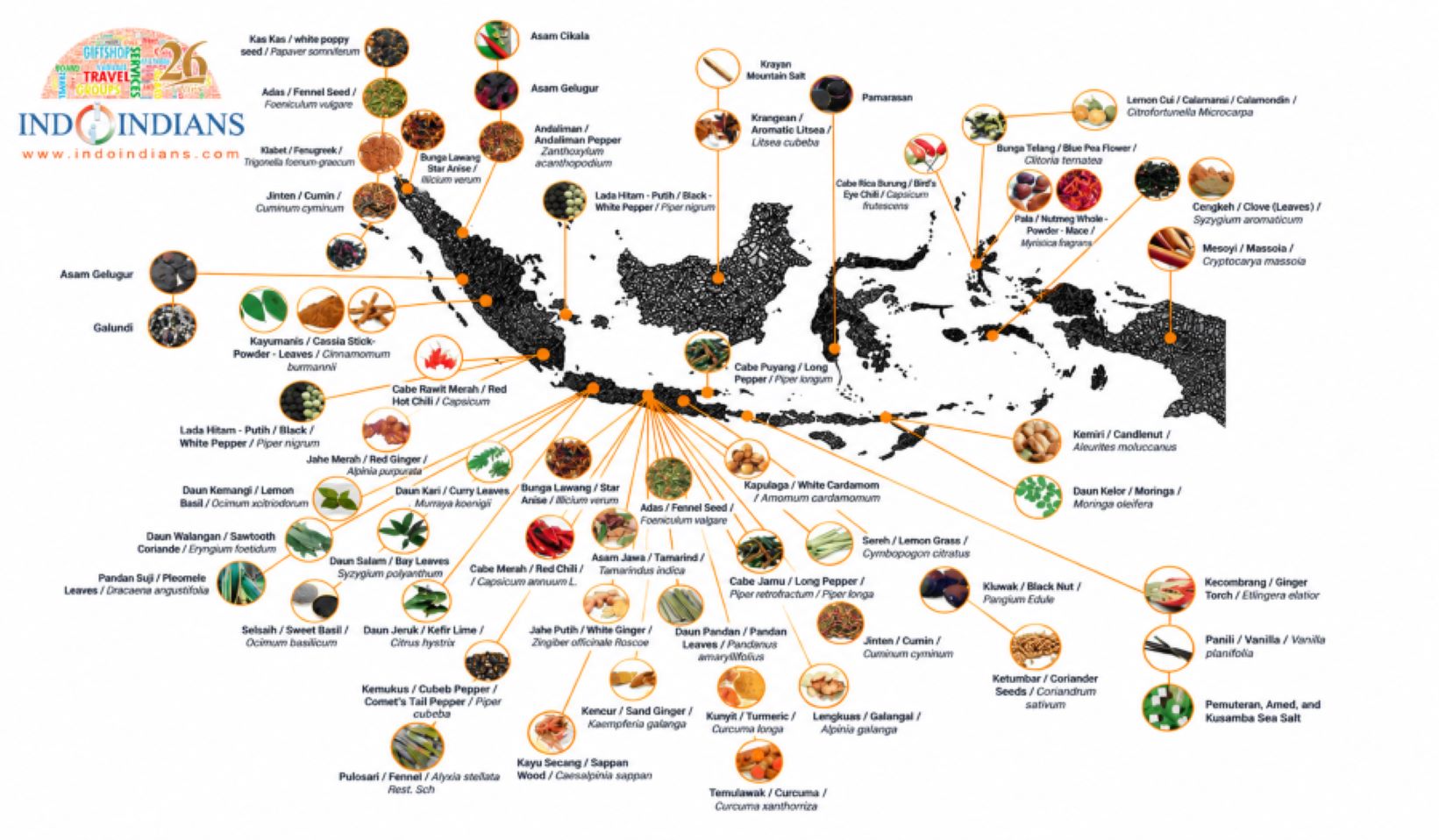
Indonesia’s geography is at the heart of that story. Stretching across the equator and shaped by mountains, volcanoes, forests and tropical seas, the archipelago offers remarkably diverse conditions for growing spices. From the cinnamon-growing highlands around Mount Kerinci to the cloves and nutmeg of Sangihe, the ginger of Sulawesi and the distinctive Andaliman of the Batak highlands, different regions have developed their own flavors and traditions.
And this is what makes Indonesia’s spice story so fascinating: there isn’t one Indonesian spice story. There are hundreds of them.
Spices that changed the world
Long before European ships appeared in Southeast Asia, Indonesian spices were already travelling through the great trading networks of Asia. Srivijaya, centered in Sumatra, grew powerful partly through its strategic position along the Malacca Strait and its connections with India and China. Later, Majapahit expanded its influence across much of the archipelago.
For centuries, cloves, nutmeg, mace and pepper moved west through China, India, the Middle East and eventually towards the Mediterranean. By the time these spices reached places such as Constantinople and Venice, they had travelled enormous distances and passed through many hands.
Then European explorers began searching for direct sea routes to the source. Portuguese ships reached the Spice Islands, followed by the Dutch and others, turning Indonesia’s spices into some of the most coveted commodities in the world. What was growing naturally in these islands helped reshape global trade and brought Indonesia into a much larger story of exploration, commerce and empire.
A spice map of Indonesia
Today, we can almost read the Indonesian landscape through its spices.
In the highlands of Sumatra, Kerinci is renowned for cinnamon. In northern Sulawesi, the lush hills of Sangihe provide ideal conditions for cloves and nutmeg. Around Tombatu, near Mount Soputan, ginger thrives, while the climate and terrain around Kendari are well suited to pepper and ginger.
Then there is Andaliman, the distinctive pepper of the Batak highlands. Small, citrusy and pleasantly numbing, it gives Batak cuisine a flavor that is difficult to replicate with any other spice. It is a perfect example of how Indonesian spices are not simply agricultural products—they are part of regional identity.
The same is true of nutmeg from the Moluccas, different varieties of ginger, Indonesian candlenut, cloves and cassia cinnamon. Each has its own character, growing environment and culinary role.
Follow the spice, and you discover the place.
From royal kitchens to our dinner tables
The great irony of Indonesia’s spice story is that ingredients once considered precious treasures are now so ordinary that we hardly think about them.
We reach for kunyit without a second thought. We crush ginger and garlic with a cobek. We add kemiri to make a sauce richer, drop cinnamon into a pot, use cloves for fragrance and sprinkle pepper over our food. We make jamu, often following recipes that have travelled through generations.
There is no sense of history attached to these everyday acts. Yet every time we cook with these ingredients, we are continuing a culinary tradition that is centuries old.
Perhaps that is the greatest legacy of the spice trade. Not the ships, the empires or the fortunes made along the way, but the way spices became woven into everyday life.
They became memory.
The smell of turmeric cooking can take us straight back to a grandmother’s kitchen. The aroma of cloves can bring back a festive dish. Ginger can remind us of a cup of something warm on a rainy afternoon. A bowl of soto or a plate of fragrant nasi kuning can taste like home, even when we are thousands of kilometers away.
The spices travelled the world.
But eventually, they became part of us.
More than flavor
Indonesian spices have always been about more than seasoning. They appear in food, drinks, traditional preparations and rituals, carrying knowledge from one generation to the next.
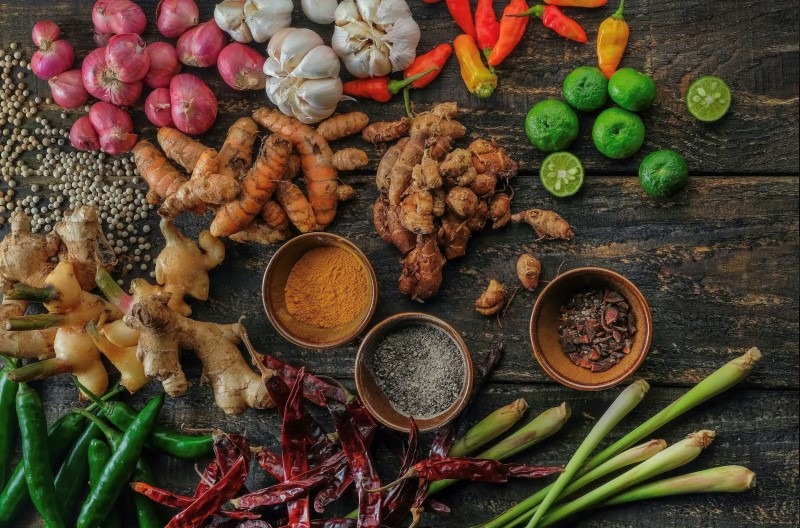
And Indonesian cooking rarely depends on a single spice. The magic is in the combination. Turmeric brings color and earthiness. Ginger adds warmth. Pepper brings heat. Candlenut gives richness. Cloves and cinnamon contribute fragrance. Cardamom adds another layer of complexity.
Together, they become bumbu—and bumbu is at the heart of Indonesian cooking.
It is this art of combining flavors that makes Indonesian cuisine so distinctive. The individual spices matter, but so does the knowledge of how they come together.
A living heritage
Indonesia’s spice story is not simply history. It is still being written.
Across the archipelago, farmers continue to cultivate spices in landscapes closely connected to forests, mountains and traditional communities. In places such as Sumbawa and Sulawesi, sustainable harvesting is also being linked with protecting forests and supporting local livelihoods.
There is also a growing appreciation for single-origin Indonesian spices—looking beyond the label “Made in Indonesia” to understand where a spice comes from and what makes that place special.
- cinnamon from Kerinci.
- clove from Sangihe.
- Andaliman from the Batak highlands.
- Nutmeg from Banda.
- Ginger from Sulawesi.
Each carries the character of its landscape and the story of the people who grow it.
Perhaps this is the next chapter of Indonesia’s spice story: not simply being known as a great producer of spices, but celebrating the extraordinary diversity, quality and heritage behind them.
The world came looking. Now we can tell the story.
For centuries, people crossed oceans searching for what grew naturally in these islands. Cloves, nutmeg, pepper and other spices drew traders and explorers from across Asia and Europe, making the Indonesian archipelago part of some of the world’s most important trading routes.
Today, we don’t need sailing ships to appreciate that heritage. We only need to open a kitchen cupboard. Inside might be a little jar of cloves, a packet of pepper, turmeric, cinnamon, nutmeg or ginger. They may look like small, ordinary things, but each one connects us to forests and mountains, farmers and communities, ancient kingdoms and ocean routes.
They connect Indonesia to India, China, the Middle East and Europe—and in many ways, they tell the story of how cultures have met, travelled and influenced one another across centuries.
This is a story that feels especially meaningful to us at Indoindians. As a community of Indians living in Indonesia, we are part of that continuing connection between two cultures that have been linked by trade, migration, ideas and food for centuries. Spices are one of the most delicious reminders of that shared history. They travelled between India and the Indonesian archipelago long before the modern borders we know today, and their influence can still be tasted in the kitchens of both countries.
Perhaps that is the most beautiful part of Indonesia’s spice story. It is not something locked away in a museum or buried in an old history book. It is alive, continuing in kitchens across Indonesia every day—being ground into bumbu, stirred into sauces, brewed into jamu and passed from parents to children.
And perhaps this is what Indoindians is about too: discovering the connections between where we come from and the country, we call home. Food gives us one of the most natural ways to do that. A familiar spice can carry a memory of India, while the same ingredient, used differently, can tell us something about Indonesia. Somewhere between the two lies a shared story.
The world once sailed halfway around the globe for Indonesia’s spices. Today, we have the privilege of rediscovering them close to home—and of celebrating the landscapes, people, traditions and cultural connections behind the flavors we have always known.
So the next time you smell freshly ground spices cooking in an Indonesian kitchen, pause for a moment. You are not just smelling dinner. You are smelling a piece of history—and perhaps a little of the connection between India and Indonesia that Indoindians has always celebrated.